Delivering an effective sales presentation can be the difference between clinching a lucrative deal and losing a potential client to the competition. Yet, many talented salespeople struggle to convert prospects, not because of a lack of product knowledge or enthusiasm, but due to avoidable presentation errors that undermine their pitch. If you find your sales numbers stagnating despite your best efforts, it’s time to examine whether your presentations are sabotaging your success. Below, we’ll unpack the critical presentation mistakes that could be killing your sales—and how to avoid them.
Neglecting to Understand Your Audience
One of the gravest sins in sales presentations is failing to research or consider the audience’s needs and interests. Too often, presenters dive straight into their script, focusing on what they want to say rather than what the prospect wants to hear. This oversight creates a disconnect, making your message feel generic and irrelevant. Instead, invest time in understanding the client’s business, challenges, and objectives. Tailor your message to show precisely how your product or service addresses their unique pain points. Personalisation demonstrates genuine interest and dramatically increases engagement.
Overloading with Information
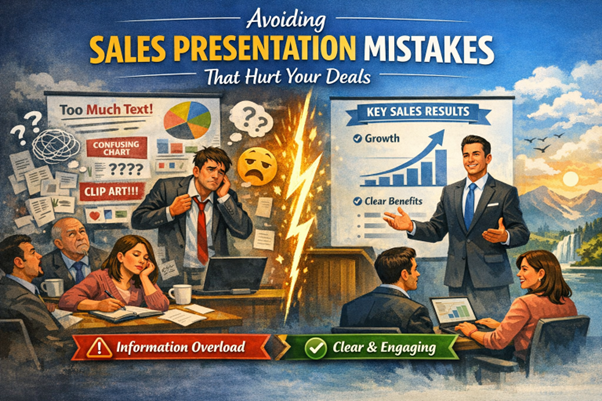
Many presenters believe that bombarding prospects with data, features, and technical specifications will win them over. The reality is quite the opposite. Information overload can overwhelm and alienate your audience, making it difficult for them to grasp your core message. Remember, less is more. Focus on the key benefits and outcomes that matter most to your prospect. Use clear, concise language and reinforce your points with relevant examples or stories. By simplifying your message, you make it easier for your audience to understand and remember your value proposition.
Lack of a Clear Structure
A muddled or rambling presentation is a surefire way to lose your audience’s attention. Without a logical flow, even the most compelling information can fall flat. Make sure your presentation has a clear beginning, middle, and end. Start by highlighting the challenges your prospect faces, then present your solution, and end with a compelling call to action. Signposting each section helps guide your audience, making your argument more persuasive and easier to follow.
Ignoring Visual Impact
Slides crammed with text, outdated clip art, or inconsistent branding can quickly undermine your credibility. Visuals are a powerful tool to reinforce your message, but they must be used wisely. Choose clean, professional templates and incorporate high-quality images or graphics that support your key points. Keep text to a minimum—aim for bullet points or short phrases rather than paragraphs. The design should enhance, not detract from, your delivery.
Reading Directly from Slides or Notes
Nothing kills engagement faster than a presenter who simply reads aloud from their slides or script. This approach feels robotic and uninspiring, signalling to your audience that you’re not confident or well-prepared. Instead, use slides as prompts and speak naturally to your audience. Practise your delivery so you can maintain eye contact and interact authentically. Engaged presenters build trust and are far more persuasive.
Failing to Address Objections
Avoiding or glossing over potential objections is a common mistake that can cost you the sale. Every prospect has concerns—about price, implementation, or suitability. If these aren’t acknowledged, they can fester and ultimately derail the decision-making process. View objections as opportunities, not threats. Invite questions, listen carefully, and respond thoughtfully. Anticipating and addressing doubts shows you’re honest, proactive, and committed to finding the right solution for your client.
Neglecting Storytelling
Facts and figures are important, but stories are memorable. Presenters who rely solely on dry data miss the chance to connect emotionally with their audience. Weave in relevant anecdotes, case studies, or testimonials that illustrate the real-world impact of your offering. Storytelling makes your pitch relatable and helps prospects envision themselves benefiting from your solution. It’s a powerful way to build rapport and trust.
Underestimating the Power of Body Language
Your words may be convincing, but if your body language sends the wrong signals, your message will fall flat. Crossed arms, lack of eye contact, or a slouched posture can convey disinterest or insecurity. On the other hand, open gestures, purposeful movement, and an enthusiastic tone project confidence and credibility. Be mindful of your non-verbal cues and practise your delivery to ensure your body language reinforces your message.
Poor Time Management
Running over time or finishing too quickly can frustrate your audience and undermine your professionalism. Respect your prospect’s schedule by sticking to the agreed timeframe. Practise your presentation to ensure you cover all key points without rushing or dragging out sections. If you need to adjust on the fly, prioritise the most critical information and be concise. Effective time management demonstrates respect and makes your pitch more impactful.
Failing to Engage the Audience
Monologues rarely inspire action. If your presentation is a one-way lecture, your audience will soon switch off. Encourage participation by asking questions, inviting feedback, or incorporating interactive elements such as polls or live demonstrations. Engagement transforms passive listeners into active participants, increasing the likelihood of a positive outcome. Remember, a dialogue is always more persuasive than a monologue.
Not Practising Enough
Even the best content will fall flat if delivered poorly. Many salespeople underestimate the value of rehearsal, assuming they can ‘wing it’ on the day. This approach rarely ends well. Practise your presentation several times, ideally in front of a colleague who can offer constructive feedback. Rehearsal builds confidence, smooths out awkward transitions, and helps you deliver your message with conviction.
Overlooking the Call to Action
Some presenters finish their pitch on a vague note, leaving prospects unclear about the next steps. Every sales presentation should conclude with a clear, compelling call to action. Whether it’s scheduling a follow-up meeting, signing an agreement, or trialling your product, make it easy for your audience to take the next step. Be direct and confident, and summarise the key benefits of moving forward.
Relying Too Heavily on Technology
Technology can enhance your presentation, but it’s not foolproof. Issues like faulty projectors, incompatible files, or dodgy Wi-Fi can quickly derail your plans. Always have a backup—bring printed slides, share materials in advance, or be prepared to present without any aids. This flexibility shows professionalism and ensures you’re not caught off guard by technical glitches.
Forgetting to Follow Up
The presentation doesn’t end when you leave the room. Failing to follow up promptly can undo all your hard work and allow competitors to swoop in. Send a personalised thank-you email, recap the key points discussed, and outline the agreed next steps. This keeps the momentum going and reinforces your professionalism. Timely follow-up is often the final nudge a prospect needs to move forward.
Lack of Passion and Authenticity
Your enthusiasm is contagious. If you don’t appear genuinely passionate about your solution, it’s unlikely your prospect will be excited either. Bring energy to your delivery and speak from the heart. Authenticity builds trust and helps you stand out in a crowded market. Prospects want to do business with people who believe in what they’re selling.
Conclusion: Turn Mistakes Into Sales Opportunities
Sales presentations are high-stakes moments that can dramatically influence your business’s success. By addressing these common mistakes—neglecting your audience, overloading information, lacking structure, ignoring visual impact, reading verbatim, dodging objections, skipping stories, poor body language, weak time management, failing to engage, neglecting practise, unclear calls to action, over-reliance on tech, forgetting to follow up, and lacking enthusiasm—you’ll transform your presentations from mediocre to memorable. Not only will you boost your conversion rates, but you’ll also build stronger client relationships and position yourself as a trusted adviser. Remember, every presentation is an opportunity to showcase your expertise and win new business—make sure you’re not letting avoidable errors get in the way of your sales success.